
It is self-evident that despite a lot of rhetoric about “family values,” Republicans don’t give a sh*t about families. For starters, they have gutted every effort to provide basic health coverage to American children. The mindless Iraq war has forced long separations of service people from their spouse and children. Successive Republican administrations have made the rich richer and have made working families poor. And then there are the aggressive enforcement actions by agents of the Immigration and Custom Enforcement. (“ICE”) According to government statistics, ICE deported 276,912 persons in 2007. ICE’s more aggressive worksite enforcement strategy dramatically increased penalties against employers, securing fines and judgments of more than $30 million while making 863 criminal arrests and 4,077 administrative arrests. Ever since Michael Chertoff, head of the Department of Homeland Security, (“DHS”) announced that ICE was “gonna get ugly” the immigrant community has gotten the worst of all possible worlds, gung-ho raids on workplaces, inhumane treatment and a massive wave of deportations. Not content to tear apart families, the Government took the extraordinary step of imprisoning whole families.
In a fit of patronage to Cheney cronies at the Corrections Corporation of America, (“CCA”) the Department gave CCA a fat contract to detain persons awaiting administrative adjudication of their claims for asylum or relief. The nominal reason for this was that many claimants did not appear for their hearings. Problem was that many of these claimants had families. So DHS decided to incarcerate not just the claimant but his or her whole family. The most infamous detention center is a prison in Taylor, Texas known as the T.Don Hutto Residential Center.
Hutto is one of two immigrant-detention facilities in America that house families—the other is in Berks County, Pennsylvania—and is the only one owned and run by a private prison company. The detention of immigrants is the fastest-growing form of incarceration in this country, and, with the support of the Bush Administration, it is becoming a lucrative business. At the end of 2006, some fourteen thousand people were in government custody for immigration-law violations, in a patchwork of detention arrangements, including space rented out by hundreds of local and state jails, and seven freestanding facilities run by private contractors. This number was up by seventy-nine per cent from the previous year, an increase that can be attributed, in large part, to the actions of Michael Chertoff, the Secretary of the Department of Homeland Security, which runs the Immigration and Customs Enforcement division.

“The Lost Children: What do tougher detention policies mean for illegal immigrant families?” by Margaret Talbot, (The New Yorker, March 3, 2008). http://www.newyorker.com/reporting/2008/03/03/080303fa_fact_talbot
One complication was that hundreds of children were among the immigrant detainees. Typically, kids had been sent to shelters, which allowed them to attend school, while parents were held at closed facilities. Nobody thought that it was good policy to separate parents from children—not immigration officials, not immigrant advocates, not Congress. In 2005, a report by the House Appropriations Committee expressed concern about “reports that children apprehended by D.H.S.”—the Department of Homeland Security—“even as young as nursing infants, are being separated from their parents and placed in shelters.” The committee also declared that children should not be placed in government custody unless their welfare was in question, and added that the Department of Homeland Security should “release families or use alternatives to detention” whenever possible. The report recommended a new alternative to detention known as the Intensive Supervision Appearance Program—which allows people awaiting disposition of their immigration cases to be released into the community, provided that they are closely tracked by means such as electronic monitoring bracelets, curfews, and regular contact with a caseworker. The government has since established pilot programs in twelve cities, and reports that more than ninety per cent of the people enrolled in them show up for their court dates. The immigration agency could have made a priority of putting families, especially asylum seekers, into such programs. Instead, it chose to house families in Hutto, which is owned and run by C.C.A. Families would be kept together, but it would mean they were incarcerated together.
“The Lost Children,” Talbot. Given that Hutto was a prison and that it operated as a prison, the facility was ill-equipped to deal with the incarcerated families. Fathers were separated from their wives and children. The children were housed in prison cells with their mothers. The children were denied toys, crayons or pictures and all had to dress in prison scrubs.
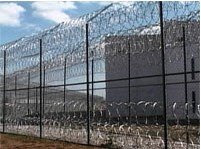 Hutto has more than five hundred beds, though the population fluctuates, and the facility appears never to have been at full capacity; about half the detainees are children. At the time the Yourdkhanis got there, many of the four hundred or so detainees were from Latin-American countries (these did not include Mexico, because Mexicans caught without documents are automatically sent home), and some of those were people who had come to the United States for economic reasons; that is, they were the kind of undocumented immigrants that most people probably think of when they hear of immigrants being rounded up somewhere in Texas. But a substantial number of the families were asylum seekers—people from Iraq, Somalia, Iran, Romania. Like the Yourdkhanis, they were people who said that they had been persecuted in their home countries, and many of them had passed the first test for achieving asylum in the United States—a so-called “credible fear” interview. None had criminal records.
Families were placed in former inmate cells. Each cell had a twin bed or a bunk bed with a thin mattress, a small metal or porcelain sink, and an exposed toilet. Generally, mothers and very young children stayed together in one cell, fathers in a separate cell, and older children in another. Husbands and wives were not allowed to visit each other’s cells. . . The cell doors were metal, and each had a window two inches wide; the floor and walls were bare, except for a shatterproof acrylic mirror. Doors were to remain open during the day, but they were wired with laser-detection alarms that were triggered when anyone came or went at night. A 2007 report by two advocacy groups—the Lutheran Immigration and Refugee Service and the Women’s Commission for Refugee Women and Children—noted that if a child sleeping in a separate cell woke up at night and went looking for his parents the alarm would sound, and only C.C.A. staff members were allowed to respond.
The guards at Hutto conducted as many as seven head counts a day, during which all detainees, even toddlers, were supposed to remain in place, usually by their beds, for as long as it took to complete the count. In practice, this meant that detainees might be in their cells twelve hours a day. (When head counts were not taking place, detainees could assemble in the common area within their “pod” of cells, where there were couches and two televisions.) Last March, an immigration lawyer named Griselda Ponce testified before the U.S. District Court in Austin about conditions at Hutto, and told of an occasion when the five- or six-year-old daughter of a woman she was interviewing had to go to the rest room. The captain on duty told the girl that she could not do so during a head count. Ponce said that the girl made “six or seven requests,” and was rebuffed each time; after about fifteen minutes, the girl “smelled of urine.”
No contact visits were allowed at Hutto—relatives had to sit behind Plexiglas partitions and talk through phones in the old prison visiting room. In any case, few relatives visited, since Hutto was so far from where most of them lived.
Children were regularly woken up at night by guards shining lights into their cells. They were roused each morning at five-thirty. Kids were not allowed to have stuffed animals, crayons, pencils, or pens in their cells. And they were not allowed to take the pictures they had made back to their cells and hang them up. When Hutto opened as an immigration-detention center, children attended school there only one hour a day.

It’s easier to gain access to the death-row section of most publicly run prisons than it is to get into Hutto, unless you are a detainee or an employee of C.C.A. Even Jorge Bustamante, a sociologist and a former Nobel Peace Prize nominee, who is the U.N. Special Rapporteur on Human Rights of Migrants, was denied access to Hutto. .. No reporters have been admitted on any occasion since a single-day group media tour, in February, 2007.
Last March, the A.C.L.U., along with the immigration-law clinic at the University of Texas and the law firm LeBouef, Lamb, Greene & MacRae, brought suit against Homeland Security Secretary Michael Chertoff and the immigration officials who oversee Hutto. . . . The A.C.L.U. commissioned a psychiatrist to investigate conditions at Hutto, and, not surprisingly, the resulting report documented depression and fearfulness among children housed there, and predicted that, until the facility overhauled its “policies and procedures beyond recognition” and replaced its “current (correctional) staff,” it would not be appropriate for children. More surprising, a psychiatric report commissioned by the government defendants also questioned the “authoritarian milieu fostered by this excessive number of security personnel,” and criticized an atmosphere “capable of contributing to the development of unnecessary anxiety and stress for these children.” The report’s author, Richard Pesikoff, a professor of psychiatry at Baylor College of Medicine, concluded that it was “essential” to make changes at Hutto, in order to protect the mental health of the children.
“The Lost Children,” Talbot. A lawsuit filed by the American Civil Liberties Union obtained a modicum of relief regarding the worst conditions.
Children are no longer required to wear prison uniforms and are allowed much more time outdoors. Educational programming has expanded and guards have been instructed not to discipline children by threatening to separate them from their parents.
In addition to making those improvements permanent, the settlement also requires ICE to provide, among other things:
· allow children over the age of 12 to move freely about the facility
· provide a full-time, on-site pediatrician
· eliminate the count system which forces families to stay in their cells 12 hours a day
· install privacy curtains around toilets
· offer field trip opportunities to children
· supply more toys and age- and language-appropriate books
· improve the nutritional value of food
Despite the tremendous improvements at Hutto, the facility retains its essential character: it was a medium security prison managed by the Corrections Corporation of America, a for-profit adult corrections company. The ACLU remains adamant that detaining immigrant children at Hutto is inappropriate and calls on Congress to compel DHS to find humane alternatives for managing families whose immigration status is in limbo.
ACLU Challenges Prison-Like Conditions at Hutto Detention Center, ACLU website, http://www.aclu.org/immigrants/detention/hutto.html# And that, my dear readers, is how a free and proud nation treats the children of people seeking asylum from dictatorships, autocrats, Middle-Eastern despots and anyone else who serves our interests.
See video on Hutto at:
http://video.google.com/videoplay?docid=3907096540955731120.
Keep up to date with developments at Hutto:
TDonHutto.blogspot.com.
If you liked this post, don't forget to subscribe to my RSS feeds. Or you can
get my posts delivered to your inbox directly, by subscribing to my feeds by email.


 Hutto has more than five hundred beds, though the population fluctuates, and the facility appears never to have been at full capacity; about half the detainees are children. At the time the Yourdkhanis got there, many of the four hundred or so detainees were from Latin-American countries (these did not include Mexico, because Mexicans caught without documents are automatically sent home), and some of those were people who had come to the United States for economic reasons; that is, they were the kind of undocumented immigrants that most people probably think of when they hear of immigrants being rounded up somewhere in Texas. But a substantial number of the families were asylum seekers—people from


